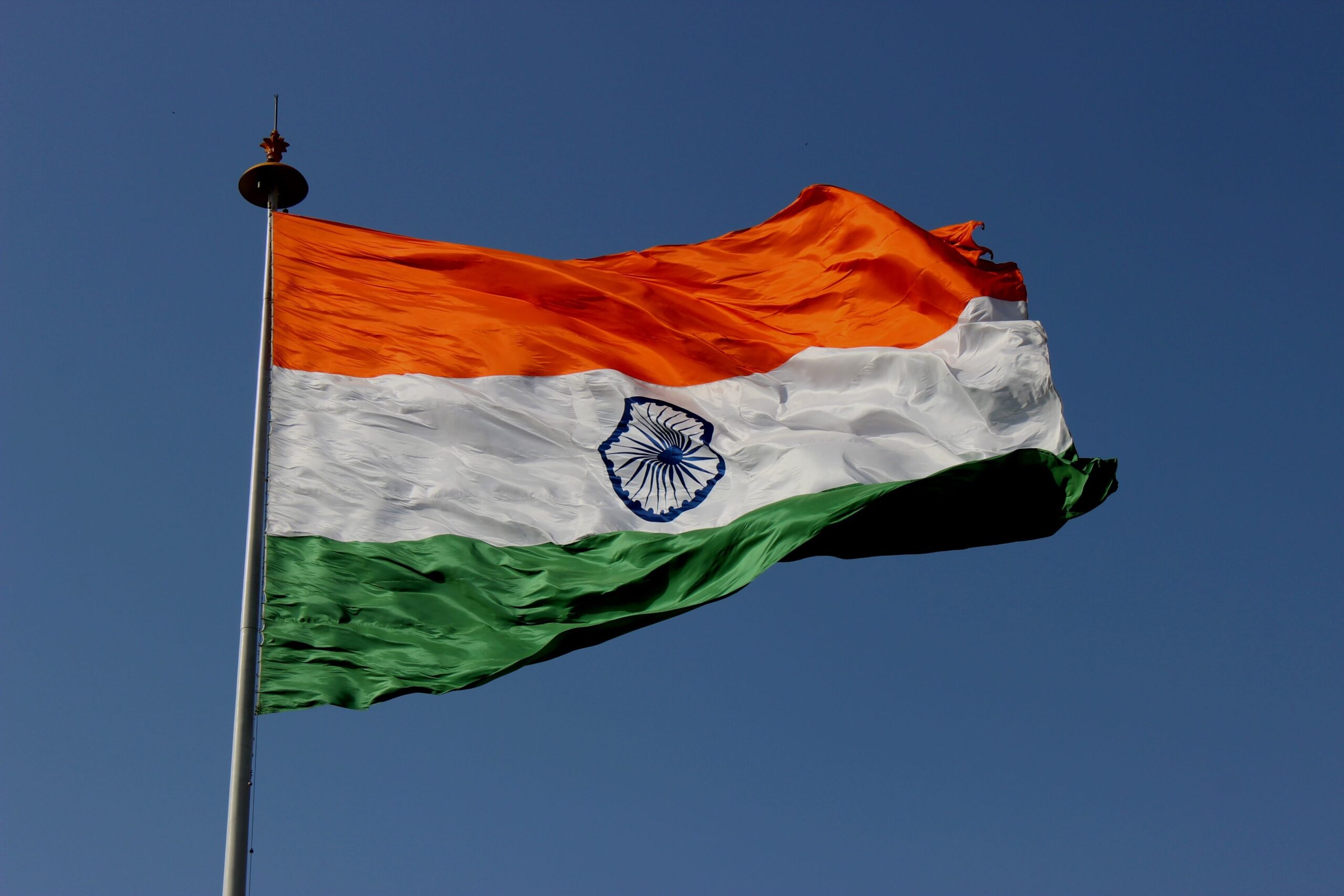
On August 15, 2026, the tricolour rose over the Red Fort for the 80th time since 1947 turned promise into a republic. It was Prime Minister Narendra Modi’s 13th consecutive address from those ramparts, and for the first time, Vande Mataram, 150 years old this year, rang out in full.
The confidence in the room showed up first as an industrial argument. Modi organized it around “Shakti ki Sapt Dhara,” seven streams of strength: manufacturing, agriculture and food processing, technology and innovation, Gati-Shakti connectivity, Raksha Shakti defence capability, the green and blue economy, and soft power. Only one stream, the green and blue economy, is explicitly built around sustainability; the rest lean on technology as the delivery mechanism, from AI and quantum computing to semiconductors, where production has begun at three plants with several more planned. Together, the seven streams read less like separate priorities than one priority, sovereign technological and industrial capacity, expressed across sectors. He pushed manufacturing specifically to compete on cost, quality, and scale together, citing defence production up nearly fourfold in 12 years, electronics manufacturing up roughly sevenfold, and mobile phone production up 33 times.
The sharpest line was aimed squarely at global business: Modi asked why 50 of the world’s Fortune 500 shouldn’t be Indian, extending the ambition to banking and pharmaceuticals, and gesturing toward law firms and rating agencies as further arenas for global leadership.
This is precisely the pitch that has international investors circling. A market of 1.46 billion people, more than half under thirty, growing at roughly 6.5% a year while older economies inch along, India is projected to supply nearly a fifth of the world’s working-age population by 2030, just as China, Japan, and much of Europe age past their prime. Add a stated policy push into semiconductors, AI, and defence manufacturing, a currency and macro picture that has stayed comparatively stable through global shocks, and a government explicitly naming the sectors it wants foreign capital to enter, and the appeal isn’t abstract; it’s a scorecard investors can underwrite against. Youth threaded through the rest of the speech too: a push to train ten million young Indians in AI, free coaching for competitive exams, and a bet that a median age of 28 is India’s greatest asset, the workforce dividend that global boardrooms increasingly can’t get anywhere else.
None of this arrived on schedule. India’s economy was worth roughly $30 billion at independence, literacy hovered near 12%, life expectancy barely 32 years. Today it is the world’s sixth-largest economy by nominal GDP, near $4.15 trillion, third-largest by purchasing power. It got there without a straight line: famine, partition, wars, the 1991 balance-of-payments crisis that nearly emptied the treasury. It is that record of absorbing shocks and continuing anyway that gives the ambition its credibility rather than its bravado.
True to form, the speech opened not with triumph but with grief, solidarity for families hit by this year’s floods and landslides, a reminder that no address from the Red Fort has ever pretended the republic is finished business. That instinct, reaching for the vulnerable before reaching for the applause line, is its own kind of resilience, the sort that repeats quietly until it becomes character.
Strip away the announcements, and what remains is a country that has learned to hold ancient and digital, agrarian and orbital, together, and turned that balance into a strength rather than a strain. Eighty years is old enough to have earned real wisdom and young enough to still be impatient for more, and on the ramparts of the Red Fort, India sounded like both: proud of the distance travelled, and energized by the distance still ahead. Few nations enter their ninth decade with their best chapter still unwritten. India, by every measure in this speech, does.
TOP WATCH
AI chips, offshore loophole probe.
A key US agency is reviewing how Chinese AI firms acquire and access Nvidia chips overseas, following technological breakthroughs that showed they could still use cutting-edge hardware despite Washington’s shipment restrictions. Investigators are specifically examining legal workarounds, such as Chinese firms renting computing power located in other countries to sidestep the ban on direct chip exports. This comes as Nvidia’s direct China sales have effectively stalled to near zero despite the H200 being formally cleared for export late last year, underscoring how enforcement has shifted from blocking chips at the border to policing indirect, cloud-based access routes.
Iran, opaque leadership under pressure.
Iran’s new Supreme Leader Mojtaba Khamenei reshaped the country’s top military leadership with six senior appointments, including a new armed forces chief of staff and IRGC commander-in-chief, and has not appeared in public since taking power after his father’s killing in a late-February strike. The US imposed its eighth round of sanctions on Iran this year, which Tehran’s foreign ministry says will only undermine chances of a diplomatic resolution. Meanwhile, Strait of Hormuz shipping traffic has stayed subdued despite US claims of full naval control.
Ukraine, mounting domestic strain.
At least 27 people were killed as Russia and Ukraine traded heavy attacks, including 16 in Russia and 11 in Ukraine, with civilians killed at a petrol station in Dnipropetrovsk, among them an emergency responder and his eight-year-old son. Domestically, pressure on leadership is rising: war veteran and protest organizer Dmytro Koziatynskyi said President Zelensky’s silence has effectively become the trigger for demonstrations, reflecting growing frustration inside Ukraine even as the frontline fighting continues without any durable ceasefire in sight