
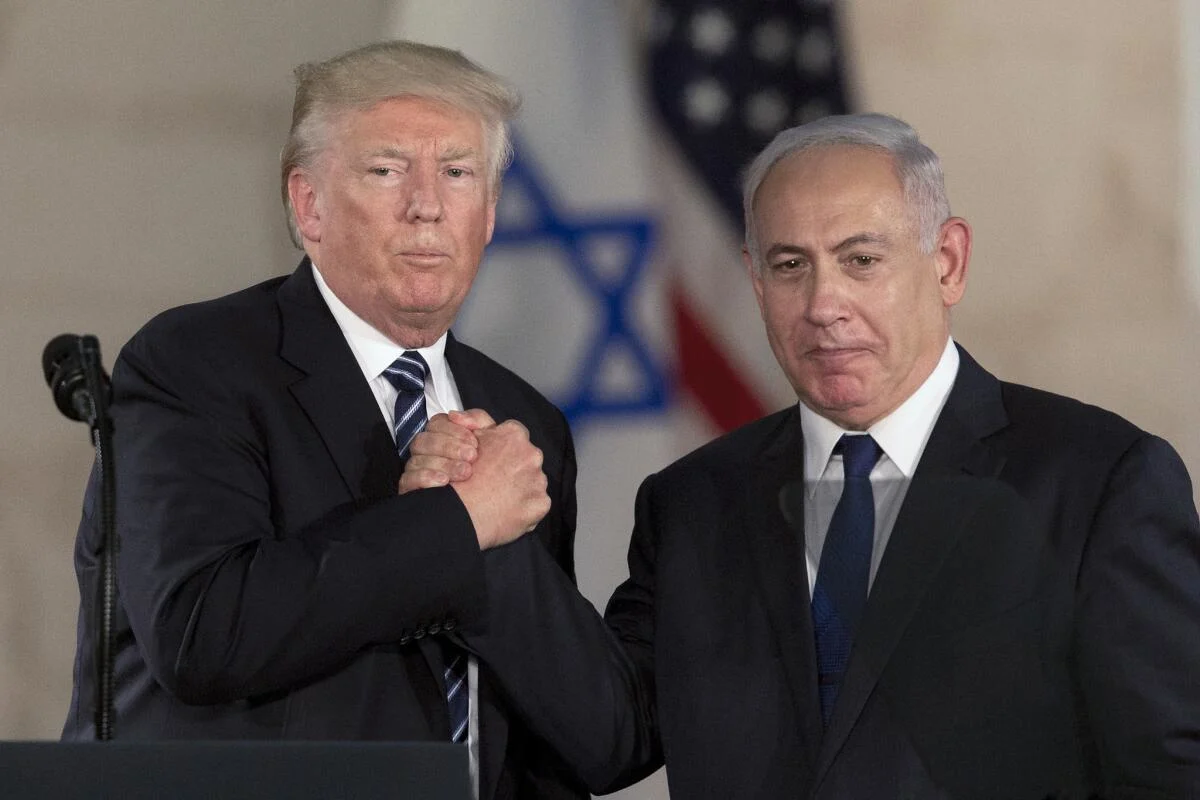
The headlines out of the recent Oval Office meeting were upbeat, Netanyahu calling it “one of the best” the two leaders have had, officials describing an “excellent and comprehensive discussion,” oil prices dipping on hopes of de-escalation. Read the transcript, though, and the picture is less a resolution than a truce of convenience one built on two leaders who each need this meeting to look successful more than they need it to actually settle anything.
Start with what didn’t get said cleanly. Hours before sitting down with Netanyahu, Trump told Fox News the US had its own intelligence on Iran’s Pickaxe Mountain site and didn’t need “Bibi” to brief him on it, an unusually pointed remark for an ally he’s supposedly in lockstep with. Israeli officials spent the day publicly downplaying that friction, insisting they don’t need this meeting for intelligence-sharing at all. That’s not the language of two governments operating as one unit; its damage control.
Then there’s the timing. Netanyahu is heading into an October 27 election, weakened in part by his own strained relationship with Trump, and analysts are blunt that he came to Washington partly to be seen standing next to Trump, not just to coordinate strategy. Trump, meanwhile, is under real domestic pressure to end a war that’s dragged on since February, hit US bases and troops, and choked off Hormuz shipping enough to move oil markets. Both men have a political incentive to declare progress regardless of what actually got resolved in the room.
That’s the real stability problem, the appearance of alignment is being asked to do work that an actual settled position on Iran isn’t yet doing. Mediators reportedly believe a revived US-Iran memorandum of understanding, the one meant to reopen the Strait of Hormuz, is close.
But on the very same day as the “positive and productive” Trump-Netanyahu talks, Iran’s Deputy Foreign Minister said Tehran has no plans to negotiate with Washington and will take “any action” necessary to retain control of Hormuz. One side is talking deal; the other is talking defiance. That gap didn’t close because two allies had a good meeting.
There’s also an unresolved structural tension baked into the alliance itself: Netanyahu reportedly wants assurances that any US arms sales to Turkey, or nuclear cooperation with Saudi Arabia, won’t erode Israel’s military edge exactly the kind of regional bargaining Washington needs to do if it wants a broader deal (Saudi normalization, a durable Gulf security architecture) that outlasts this war.
What This Means for India
None of this is happening at arm’s length from India. India imports roughly nine-tenths of its crude oil, and Brent’s every Hormuz-related lurch shows up almost immediately in the rupee, the current account deficit, and pump prices at home.
The RBI has already spent months defending the currency in spot, forward, and offshore markets to keep it off the 95-per-dollar mark, and LNG-dependent sectors fertilizer, power have been running on capped allocations since Gulf supply routes were disrupted earlier this year.
That’s the direct channel: this isn’t a story India watches from the sidelines, it’s a story that shows up in its trade deficit.
It’s also why the “stability by performance, not by settlement” read on the Trump-Netanyahu meeting matters practically, not just diplomatically, for New Delhi. A genuine Hormuz reopening would ease the single biggest external risk to India’s inflation and growth outlook this year. A meeting that merely looks like progress while Iran keeps threatening “any action” to control the strait leaves that risk exactly where it was, just with calmer headlines around it. India has hedged accordingly, quietly resuming Iranian oil and gas purchases after a seven-year gap even as it stays aligned with Washington, a sign New Delhi isn’t betting the handshake photos hold.
Layered on top of this is a separate but concurrent friction point with Washington: on July 23, the US Trade Representative finalized new Section 301 tariffs tied to forced-labor enforcement, covering 60 economies. India landed in the lower 10% tier (versus 12.5% for countries USTR judged to have no import prohibitions at all), a result credited to sustained engagement between New Delhi and USTR. Even so, about 55% of Indian exports to the US will carry the new duty on top of existing MFN tariffs; the other 45%, including smartphones, generic pharmaceuticals, steel, aluminium, and auto parts, is exempted. It’s a smaller hit than several peer economies are absorbing, but it lands at the same moment India is trying to manage Middle East-driven cost pressure squeezing trade competitiveness from one direction while oil squeezes the import bill from the other.
A Parallel Story at Home
here’s a domestic echo of the same “stability by performance” dynamic playing out inside India right now, and it’s worth a mention given how much global attention it’s drawn this past week. The youth-led “Cockroach Janta Party” protests sparked by a Chief Justice remark comparing unemployed young people to cockroaches, and given a concrete grievance by the NEET exam-leak scandal, grew over roughly two months into what analysts are calling the biggest domestic challenge of Modi’s twelve years in office. After a period of pushback, including forceful policing at Delhi’s Jantar Mantar in late July, the government moved quickly once it decided to move: Education Minister Dharmendra Pradhan resigned on July 25, and protest leaders called off the nationwide demonstrations. Pradhan’s resignation and the exam-reform commitments answer the immediate trigger. The current stabilizing fast action by the government will prove its real worth in the months to come.
TOP VOICE
India–UK trade pact: a hedge, not a replacement
The India–UK CETA, in force since July 15, gives India zero-duty access on nearly 99% of its exports, alongside services access and a social-security deal for short-term professionals. Britain scrapped duties on 96.8% of tariff lines, covering 97.7% of bilateral trade by value, a real win for textiles, leather, seafood, gems, engineering, and IT/MSMEs. Strategically, it signals India’s answer to US protectionism: diversify rather than concentrate risk. But the UK market can’t match the US scale. Read it as one plank in a diversification strategy, not a substitute for resolving America’s tariff pressure.
India–China: thawing ties, unequal terms
At July 22 talks, India pushed China on market access, its trade imbalance, and supply-chain predictability India imported roughly $132 billion from China in 2025-26, running a deficit above $100 billion. The thaw suits both sides,India needs Chinese machinery, components, and pharma inputs; China gains a calmer relationship and market access as global trade blocs fragment. But the asymmetry persists: India depends heavily on Chinese inputs while getting little reciprocal access, and border stability remains the precondition for going further. The real story isn’t warmer optics; it’s whether India can convert them into supply security without recreating pre-2020 dependence.
Turkey’s quiet rise
Turkey’s regional weight is growing without a single defining headline. Its defense spending hit roughly $30 billion in 2025, outpacing the combined budgets of several neighbors, built on an increasingly indigenous arms industry, drones, missiles, warships. Ankara projects influence from Syria to Libya to the Caucasus, leveraging NATO membership while pursuing an independent, transactional foreign policy that unsettles Washington and Israel alike. That’s precisely why Netanyahu is reportedly seeking US assurances that arms sales to Turkey won’t erode Israel’s military edge. The rise is quiet only in the sense that it’s cumulative, capability by capability, not dictated by any one dramatic event.