
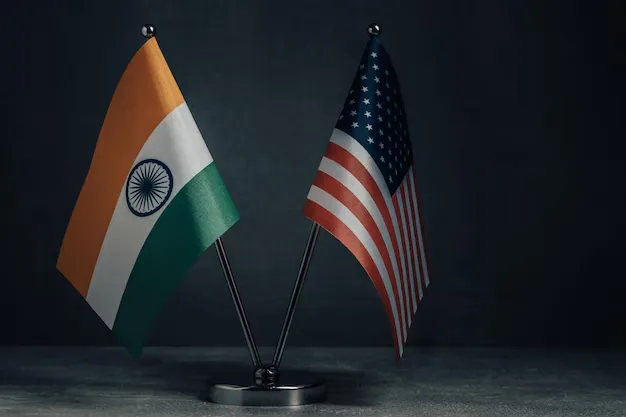
A temporary U.S. tariff arrangement expires on July 24 just days away and despite talk of being “in the last 1 percent,” India and the United States still haven’t signed the interim trade deal both sides have spent over a year negotiating. Officials on both sides call the talks constructive. But constructive and conclusions are not the same thing, and time is no longer an abstraction here.
The whiplash has been dizzying. Two weeks ago, U.S. Trade Representative Jamieson Greer’s team left New Delhi with both governments claiming the deal was 99 percent finalized. Then India pulled back unsettled by conflicting domestic economic policies, sudden judicial disruptions, and fresh American tariff investigations. This week, India’s commerce secretary insists the framework is “ready” and there are no real obstacles left, while declining to name a date. That gap between “ready” and “signed” is exactly where this deal keeps getting stuck.
At the heart of it is a familiar tension. Washington wants greater access for its agricultural products, medical devices, and digital businesses, and is pushing India on tariffs, labour standards, and regulatory rules. India isn’t
budging on anything that threatens domestic industry, rural livelihoods, or its own policy room to maneuver. This is not a negotiation between strangers it’s between two governments that have never been strategically closer, deepening defence ties and technology cooperation even as trade remains their hardest chapter.
The pressure on India to hold its ground is real, but so is the cost of drift. India has become one of the biggest winners of the global “China-plus-one” shift new factories, rising exports, growing credibility as a manufacturing base for electronics, pharma, renewables, and autos. None of that is free from a ticking clock. Investors can absorb higher costs. What they can’t absorb is not knowing what the rules will be in ten days.
Washington has its own clock problem. Trade policy has become domestic politics by other means, with tariffs,
export controls, and industrial subsidies now treated as permanent tools rather than temporary levers. That means neither side is negotiating in a vacuum both are boxed in by politics at home even as the strategic logic for closer ties has never been stronger.
None of this should be read as a relationship breaking down. But the July 24 deadline is a real forcing function, not a formality, and how both sides handle it will say more about this partnership than months of “constructive talks” language has. India, notably, isn’t scrambling to beat the clock, it’s negotiating for preferential terms, not a press- release date, a posture that speaks to real leverage rather than dependence. The question now isn’t whether the relationship survives this deadline. It’s whether either side is willing to let the clock run out to prove a point and what that would cost the workers, businesses, and consumers counting on this deal to land.
TOP WATCH
India–UK Free Trade Agreement Comes Into Force
The India–UK Free Trade Agreement comes into effect today, marking one of India’s most significant bilateral trade milestones in recent years. The pact is expected to reduce tariffs across a wide range of goods, improve market access for businesses, and deepen cooperation in services, investment and innovation. For India, the agreement strengthens export opportunities in sectors such as textiles, pharmaceuticals, engineering goods and IT services, while UK businesses gain easier access to one of the world’s fastest-growing major economies. The FTA is also seen as a strategic signal of India’s expanding role in global trade as supply chains diversify beyond traditional markets.
Hormuz Tensions Reignite Oil Markets
Renewed strikes near the Strait of Hormuz pushed Brent crude toward $79 a barrel, marking a 5.4% weekly gain, as Washington and Tehran traded conflicting claims over the waterway’s operational status. The volatility follows a fragile ceasefire framework reached earlier this summer, which has struggled to hold amid continued military posturing. Analysts note markets haven’t yet decided whether the resulting energy costs represent an inflation risk or a broader growth threat, complicating the Federal Reserve’s own rate-path calculations heading into this week’s data.
Japan-India Summit Signals a Quiet Realignment
A recent Japan–India summit was read by analysts as evidence the two countries are drawing closer together even as both navigate an increasingly uncertain global order. The meeting reinforced deepening economic and security cooperation between Tokyo and New Delhi, particularly in areas such as resilient supply chains, critical technologies, infrastructure and maritime security. It reflects a broader trend across the Indo-Pacific, where middle powers are building stronger bilateral partnerships to enhance strategic autonomy and reduce dependence on any single global power.