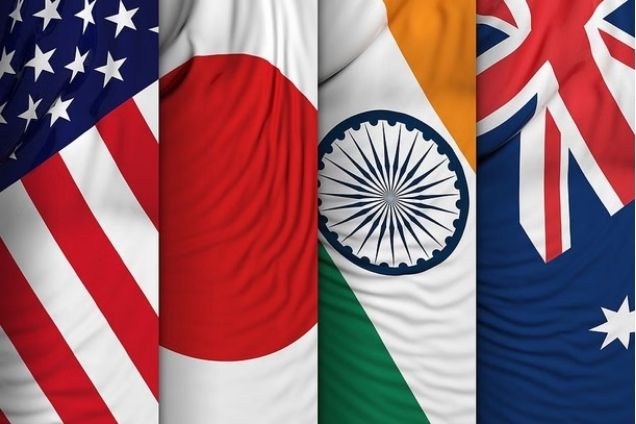
For global investors looking at India, the recently concluded Quad foreign ministers’ meeting in New Delhi should be read less as a diplomatic event and more as a signal of where strategic capital may flow over the next decade.
For some time, the Quad had begun to look like an idea losing operational momentum. The absence of a leaders’ summit, tensions in bilateral relationships, and the larger uncertainty in global trade politics had raised a fair question: Was the Quad becoming another high-sounding platform that struggled to move beyond statements? The New Delhi meeting has not fully answered that question, but it has certainly changed the tone. By announcing a critical minerals framework, an Indo-Pacific energy security initiative, a port infrastructure project in Fiji, and deeper maritime surveillance cooperation, the grouping has attempted to move from geopolitical language to economic architecture.
The most important development is the Quad Critical Minerals Initiative, with an ambition to mobilise up to $20 billion in public and private support across mining, processing and recycling. This matters because the next phase of industrial competition will not be decided only by factories, chips and data centres. It will also be decided by access to lithium, cobalt, nickel, graphite, rare earth elements and the processing capacity that turns raw materials into strategic inputs. Electric vehicles, renewable energy, semiconductors, defence systems, telecom networks and AI infrastructure all sit on these material foundations.
This positions the Quad as an apt de-risking platform, with an unwritten thrust on reducing dependence on China in sensitive areas: critical minerals, energy security, ports, undersea cables, maritime surveillance, 5G/6G, AI supply chains and emergency response. Export controls and supply disruptions have shown that mineral dependence can quickly become strategic dependence. For investors, this is no longer an abstract geopolitical concern. It is a real supply chain risk, with implications for manufacturing continuity, project finance, defence production, clean energy deployment and technology valuations.
The significance of India as host, therefore, should not be underestimated. New Delhi was not just a venue; it was a message. India sits at the intersection of three realities that matter to global capital: it is a large demand market, a potential manufacturing alternative to China, and a geopolitical actor with credibility across both the West and the Global South. Unlike traditional US allies, India does not frame its foreign policy through alliance obligations. That gives the Quad a different character when convened in India. It becomes less about bloc politics and more about diversified resilience.
This distinction is important. A Quad that finances ports, secures energy routes, builds maritime awareness, supports trusted technology standards and reduces single-source mineral dependence has wider relevance. It offers not confrontation, but optionality.
For India, the opportunity is significant but not automatic. Critical minerals require more than diplomatic agreements. They need exploration reform, faster clearances, private capital, processing capability, recycling ecosystems, ESG safeguards and integration with global offtake arrangements. India’s advantage will not come simply from being part of the Quad. It will come if India can convert strategic alignment into investable projects.
That is the key takeaway for global investors. The Quad’s renewed progress suggests that geopolitics is increasingly becoming an industrial policy instrument. Supply chains are being redesigned not only for efficiency, but also for trust, redundancy and political resilience. India is positioned as one of the principal beneficiaries of this shift, but execution will determine the scale of the prize.
The New Delhi meeting does not make the Quad a finished strategic project. It does, however, show that the grouping is trying to become more practical after a period of drift. For investors, that practicality matters. In a world where minerals, ports, energy routes and digital infrastructure are becoming strategic assets, India’s role in the Quad may increasingly shape where capital feels secure, where supply chains get rebuilt, and where the next decade of Indo-Pacific growth is financed.
TOP WATCH
India Advances Trade Engagements with US and Canada
India advanced two major economic tracks this week, signaling a sharper push on strategic trade and supply-chain resilience. In New Delhi, India and the US signed a framework agreement to secure mining and processing of critical minerals and rare earths. Separately, Commerce Minister Piyush Goyal said India and Canada aim to conclude the Comprehensive Economic Partnership Agreement by year-end and triple bilateral trade by 2030. Goyal visited Ottawa with a 112-member business delegation, marking a renewed effort to rebuild economic ties after diplomatic strain.
Red Sea Attacks Continue to Disrupt Global Shipping
Global shipping companies are continuing to divert vessels away from the Red Sea following repeated attacks on commercial ships in the region. The disruptions have increased freight costs and delayed cargo movement between Asia and Europe. Energy markets remain sensitive to the crisis as the route handles a significant portion of global oil and trade flows. Several governments have strengthened naval deployments to secure maritime passage, while businesses warn that prolonged instability could further strain already fragile supply chains. Economists say the situation could contribute to higher global inflation if disruptions persist through the year.
China Expands Its Strategic Footprint Across Africa
China has expanded investments across several African nations through infrastructure, mining and energy partnerships as competition for influence on the continent intensifies. New projects linked to ports, railways and critical minerals have drawn attention from Western governments and India, all seeking stronger economic ties with Africa. The continent’s vast reserves of lithium, cobalt and rare earth minerals have become increasingly important for electric vehicles and clean energy technologies. Analysts believe Africa is now central to the geopolitical contest over future supply chains, making the region one of the world’s most strategically significant economic frontiers.